
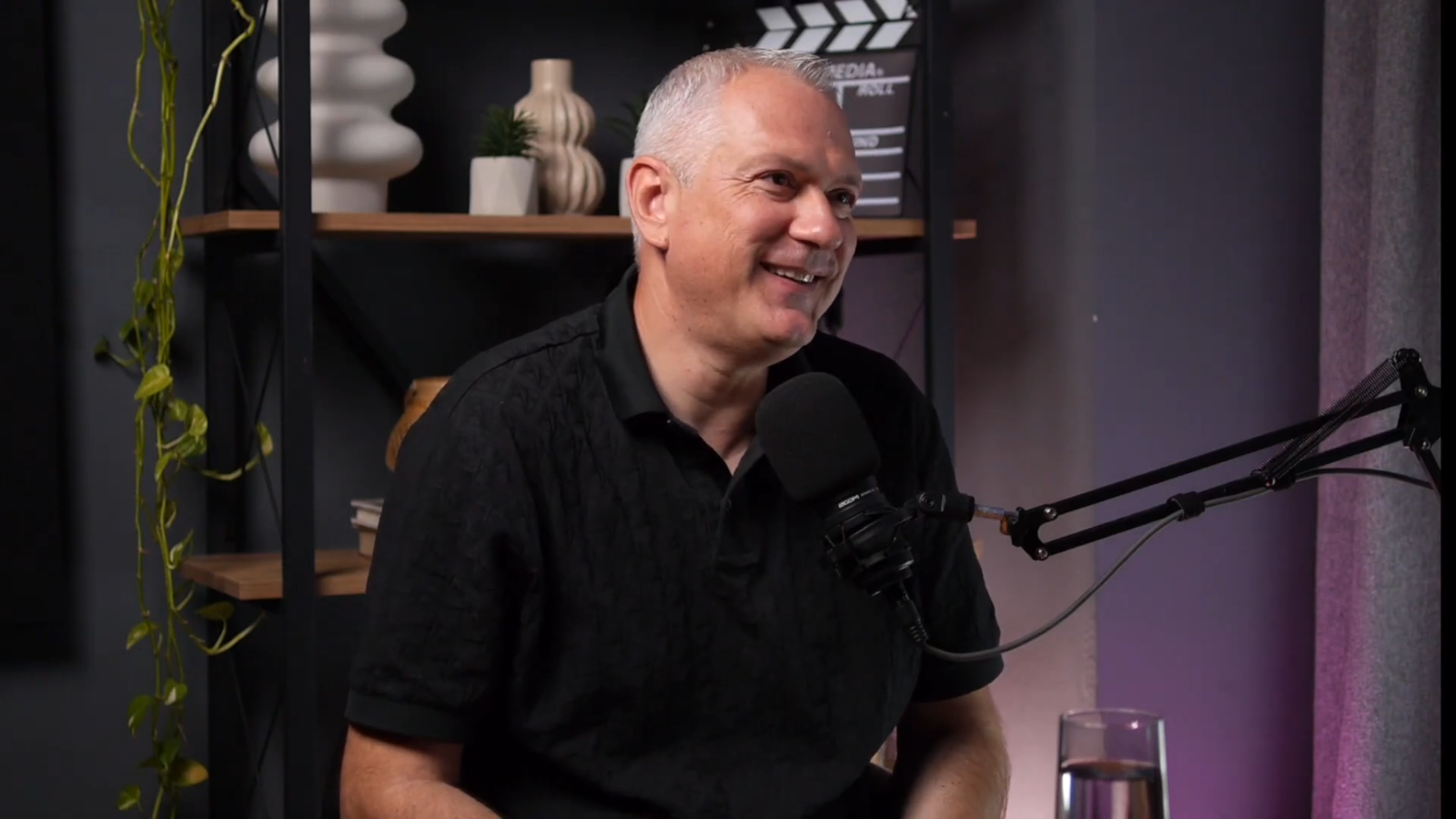
A few days before one of the biggest games of Emil Rajković’s playing career, Blagoja Patrovski – Ero told the coaches at Rabotnički to give him a chance.
“Give Emil a chance. He doesn’t miss in practice.”
Rajković remembers making as many as 113 out of 120 three-pointers in practice around that time. The next game was the deciding game against MZT for the championship. Before it started, Marin Dokuzovski came up to him with a message that didn’t exactly sound like a confidence boost.
“Kid, are you going to make a three today?”
Dokuzovski knew him well enough to know what that would do. Instead of calming him down or telling him that he believed in him, he challenged him. Rajković answered: “Yeah, just give me a chance.”
He missed his first shot. Dokuzovski told him to keep shooting. Then he made five or six in a row and finished the game with 21 points. Rabotnički won its seventh championship.
Years later, Rajković doesn’t remember that moment only because of the shots he made. He uses it as an example of something he now tries to do as a coach himself: know the person you’re working with.
First, you have to know the person
When I ask him how he helps a player who has the ability but lacks confidence, Rajković doesn’t have one technique that works for everybody.
“I think everything starts with knowing the person you’re working with.”
For him, that means knowing something about the player’s professional life and their life away from basketball. Enough to understand where the problem might be coming from. One player may lack confidence. Another might look like he has too much of it.
Over the years, he has worked with players whose confidence was mostly a front. They looked arrogant and completely sure of themselves, while underneath there was insecurity they were trying to protect. In those situations, telling somebody to simply “believe in yourself” doesn’t get you very far. The coach has to figure out what is actually behind the behavior.
The same applies when the problem shows up on the court. If a player doesn’t trust his shot, a conversation can help, but Rajković insists that there has to be work behind it too. The shot needs to be repeated enough times, under conditions that resemble a game, until the player has a real reason to trust it.
There are also players who have already done that work. They practice for hours, shoot well, and still hesitate once the game starts. Sometimes they need somebody else to confirm what is already there.
For Rajković, Dokuzovski was that person.
But the sentence that worked for him might not work at all with another player.
From millionaires to players who don’t know what to expect
In more than two decades as a coach, Rajković has worked in Macedonia and abroad, with players from different countries, religions and cultures. He has also worked with people at completely different points in their professional lives.
Some are already big names. He describes players who operate almost like companies, with twenty or thirty people around them and contracts worth millions. They have status and experience, and they know exactly what they expect from a club and a coach.
In the same profession, he also works with young players who, as he puts it, are “completely lost” and don’t yet know what a real professional practice looks like.
The coach has to find a way to reach both.
That is one of the reasons Rajković believes it is important to have interests and knowledge outside basketball. If you want to build a relationship with someone who comes from a different country, culture or background, you first need to find something you can actually talk about.
One of the coaches who showed him a different way of doing that was Steruli Andonovski. Rajković saw in him what it looked like for a coach to take an almost fatherly approach to his players. Sometimes that meant helping a player with a problem that had nothing to do with basketball and earning his trust there first.
Rajković says that the loyalty you build on a human level eventually shows up on the court too.
Conversations in the park
Later, when Rajković began leading teams himself, some of that work happened away from practice.
From his time at Feni, he remembers players such as Darko Sokolov and Darko Radulović going through periods when they weren’t playing at the level expected of them. Instead of having every conversation in the gym, Rajković would take them for a walk in the park.
They talked about what wasn’t working.
He wanted to rebuild their confidence, but also remind them of the specific things they were already doing well. He believes those conversations helped, and as his career went on, he became much more deliberate about the psychological side of working with players.
That doesn’t mean it always worked.
“Sometimes we succeeded, sometimes we didn’t.”
It’s a part of coaching that is easy to miss when all we see from the outside is the standings. A coach can prepare the practice, the tactics and the scouting report. He is also working with people, and people don’t always respond the way you expect them to.
When the result is your responsibility
In professional sport, all of that work still ends up in numbers. Wins, losses, standings, championships won and championships lost.
Rajković doesn’t pretend otherwise. During the ATG Warm-up, I ask him whether he would rather win while playing badly or lose while playing well. His first reaction is simple: every coach chooses the win.
Except a season isn’t one game.
If a team is still being built, he says there are times when you can sacrifice a friendly game to learn something that will matter later. The result matters, but a coach also has to know where the team is in the process.
You can hear something similar when Rajković talks about his own development as a coach. When he was younger, he spent long hours analyzing games, sometimes exhausting himself trying to find a solution. Today, experience helps him get to the point faster and recognize what actually deserves his attention.
Twenty years of experience haven’t left him with one answer that he now uses with everyone. If anything, the longer he talks about coaching, the more he comes back to the individual player.
Confidence doesn’t start with a motivational speech
As a teenager, Rajković used to do something before games that he would only later recognize as visualization. He would picture the gym he was going to play in the next day, the crowd, the floor, the basket and the ball leaving his hands.
He hadn’t read books on sports psychology. Later, as a coach, he became much more intentional about psychological preparation and says there are moments when it can matter more than physical, technical or tactical preparation.
But throughout the conversation, he keeps adding something to that idea.
Confidence isn’t built through reassurance alone. If the problem is the shot, there has to be practice behind it. If you want an honest conversation, there has to be trust. And if you want to know what to say to a player, you have to know him first.
Before that championship game, Marin Dokuzovski could have told Emil Rajković, “You’re a great shooter. I believe in you.”
Instead, he asked him whether he was finally going to make a three.
With another player, that might have been exactly the wrong thing to say.